




 0
0

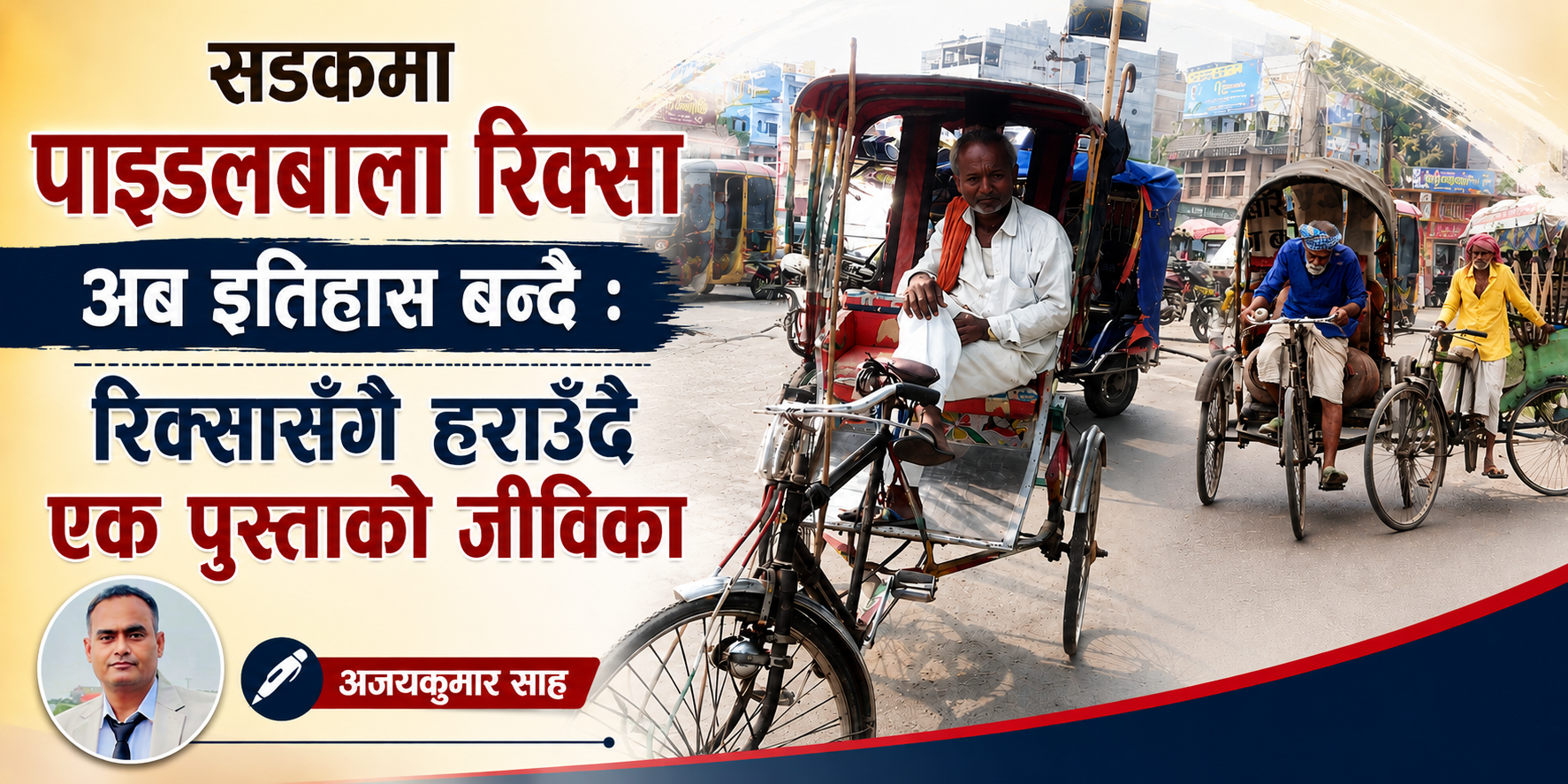
By Ajaya Shah
Gaushala (Mahottari) : There was a time when the sound of pedal rickshaw bells was a familiar feature of the streets of major towns in Madhes, including Janakpurdham, Jaleshwar, Gaur, Lahan, Siraha and Birgunj.


Pedal rickshaws, which were the main means of transporting passengers from market squares to narrow lanes, had become an integral part of urban life in Madhes. Today, however, pedal rickshaws are gradually disappearing from the streets with the growing use of electric rickshaws.
E-rickshaws have become popular among passengers because they can take them to their destinations in less time, carry more passengers and require less physical effort from drivers.
The change, however, has directly affected pedal rickshaw drivers who have depended on the occupation for decades. The shift has become a livelihood challenge, particularly for elderly drivers and those who operate rented rickshaws because they lack the capital to own one.
A few elderly drivers can still be seen operating pedal rickshaws along the Jaleshwar-Bhitthamod road section in Mahottari.
Ram Bahadur Mahara, 51, of Jaleshwar Municipality-3 has been driving a rickshaw for the past two decades. Once kept busy transporting passengers, he now finds it difficult to earn enough even after working throughout the day.
“Twenty years ago, I was constantly busy carrying passengers. The income was also good,” he said. “Now there are e-rickshaws at every junction. Even after working hard all day, it is difficult to earn Rs. 400-500.”
Mahara has to pay around Rs. 200 a day to the rickshaw owner from his daily earnings as rent. Unable to afford his own rickshaw, buying an e-rickshaw is even further beyond his means. “If I cannot afford a rickshaw costing Rs. 50,000, how can I buy an autorickshaw costing hundreds of thousands of rupees?” he asked.
Pedal rickshaws have also become much less common in Janakpurdham than in the past. Laxman Chaudhary, 49, said it was difficult for him to change his occupation because driving a rickshaw was the only skill he had.
“It has become difficult even to make a living by driving a rickshaw. If the situation remains the same, there will come a day when I will be forced to leave this occupation against my will,” he said.
Indian nationals have also been driving rickshaws in the Bhitthamod area for many years.
Ghanshyam Jha, 74, of Janakpurdham Sub-Metropolitan City-4 says his life has been connected with pedal rickshaws for more than four decades. He bought a rickshaw from Umgaon in India for Rs. 800 and has been driving it for the past 41 years.
According to Jha, pedal rickshaws were the main form of public transport in Janakpurdham until about a decade ago. There were separate rickshaw stands at Shiva Chowk, Janak Chowk, Bhanu Chowk, Ram Chowk and the bus park. He said around 3,000 pedal rickshaws were operating in Janakpurdham at the time.
Now, unable to find enough passengers, Jha has started using his rickshaw to transport gas cylinders rather than passengers.
Ram Dinesh Raut, 68, of Kuwa in Janakpurdham-12 has also been driving a rickshaw for around 45 years. His rickshaw has now become a means of taking tourists around the city. He said some tourists visiting Janakpurdham enjoy riding his old rickshaw after seeing it, allowing him to earn some income by taking them around the city from time to time.
The younger generation, however, is no longer attracted to the pedal rickshaw-driving profession. The heavy physical labour, low income and declining social prestige associated with the occupation have discouraged young people from taking it up. Those with capital have shifted to e-rickshaws, while capital-poor and ageing drivers continue to depend on their old rickshaws.
Raju Paswan, a human rights activist, said although technological development and changes in transport are natural, the livelihoods of workers displaced by such changes cannot be ignored.


प्रतिक्रिया
ट्रेन्डिङ
सम्बन्धित खवर